




Grinding, Repetition, and Time-Based Progression Systems
 Milijana Komad / 6 min read
Keywords: Grinding, Video Game Design, Player Behavior, Psychological Manipulation, Progression Systems, Operant Conditioning
Abstract
This paper examines the role of grinding as a psychological and structural mechanism within modern video game design. While commonly defined as the repetitive execution of in-game actions to obtain rewards, grinding extends far beyond mechanical progression. Grounded in principles of operant conditioning, variable reward anticipation, and cognitive investment biases, grinding shapes player behaviour, prolongs engagement, and subtly reinforces monetization pathways. Through a product-design lens, this study analyses grinding as both a progression tool and a behavioural manipulation technique, supported by case studies across MMORPGs, action-looters, and mobile puzzle games. The findings highlight grinding’s dual nature: a system capable of enhancing immersion and flow, yet equally capable of exploiting psychological vulnerabilities when poorly balanced.
Introduction
In contemporary game design, grinding has evolved from a simple pacing mechanism into one of the most influential forms of psychological conditioning. At its core, grinding describes the repeated performance of tasks to achieve incremental advancement — an approach that underpins many of the world’s most successful games. These loops are seldom accidental; they are carefully engineered to shape long-term engagement, influence decision-making, and maintain retention across extended periods.
From a behavioural-psychology perspective, grinding interacts with several cognitive mechanisms, including the sunk cost fallacy, endowed progress effect, and variable-ratio reward schedules. Whether leveling in MMORPGs, farming loot in action-shooters, or replaying difficult puzzles in mobile games, grinding operates both as a progression mechanic and as a subtle driver of behavioural conditioning. This paper evaluates grinding’s functional role, design strategy, and psychological implications while addressing the ethical considerations surrounding its use in modern game ecosystems.
In games such as RuneScape, grinding can involve mining, fishing, or woodcutting. Repeating these actions raises skill levels, enabling players to perform new tasks, complete quests, or create new items.
Implications for Game Design
Grinding, while a tool to extend game playtime and potentially drive monetization, must be thoughtfully implemented to avoid player fatigue or burnout. Game designers should strike a balance between meaningful progression and repetitive grind, ensuring the game remains engaging and satisfying.
The Role of Grinding in Game Design
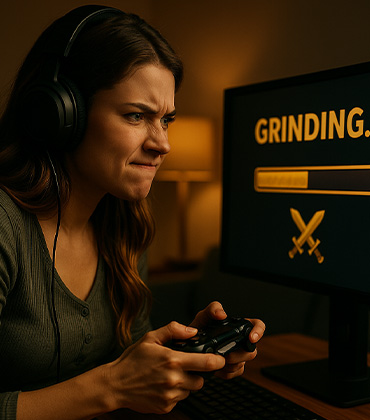
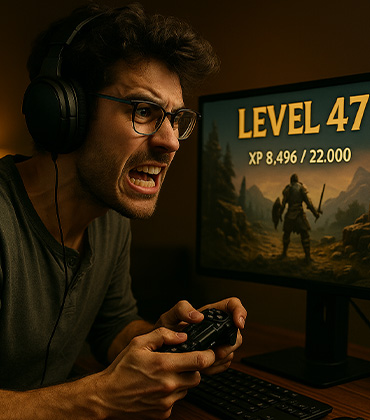
Grinding has become one of the most recognizable and controversial pillars of video game structure. It serves as a predictable loop: perform a task, receive a reward, and repeat. Though simple, the psychological tension between effort and payoff creates a compelling motivational dynamic that keeps players moving forward. On the surface, grinding appears to be a structural necessity for pacing and progression. Beneath that, it becomes a mechanism for maintaining attention, shaping behaviour, and reinforcing monetization cycles.
Understanding Grinding: Concept and Function
Grinding draws its effectiveness from the intersection of operant conditioning, effort-reward ratios, and cognitive investment biases. Its power lies not in the reward itself, but in the anticipation of reward delivered at controlled intervals.
Common Forms of Grinding
Experience Grinding — defeating enemies or completing repetitive quests to level up.
Resource Grinding — harvesting items, materials, or currency for crafting or upgrades.
Loot Grinding — replaying content to obtain randomized or rare drops.
Skill Grinding — performing specific actions repeatedly to increase proficiency.
These systems create an environment where progress consistently feels just within reach, encouraging long sessions or habitual daily play.
Grinding as a Progression Strategy
From a product-design standpoint, grinding is a powerful content multiplier. Rather than producing endless unique levels, designers extend gameplay longevity by engineering deliberate repetition.
1. Extending Game Lifespan
Grinding stretches limited content across longer timelines, a practice prominent in MMORPGs and widely used in mobile and live-service titles.
2. Creating Meaningful Achievement
Effort can increase perceived value through effort justification; the IKEA effect offers a related example involving successfully completed, self-made products. Hard-earned rewards may feel more significant than easily obtained ones.
3. Maintaining Flow
Repetitive tasks can provide a relaxing rhythm for some players. They may support flow when challenge, skill, goals, and feedback remain appropriately balanced; low intensity alone does not establish a flow state.
4. Supporting Monotask Relaxation
For many players, grinding offers a calming, meditative rhythm. Predictable repetition can induce comfort, making the activity intrinsically soothing.
Case Studies
- 1. World of Warcraft
WoW integrates grinding at nearly every systemic layer — leveling, reputation farming, dungeon loot cycles, and crafting materials. These loops form a communal system of shared goals and long-term engagement.
2. Destiny 2
Destiny relies heavily on a “loot treadmill,” where players replay content to earn randomized gear. Carefully tuned drop rates create constant micro-goals that sustain daily and weekly player activity.
3. Old School RuneScape
RuneScape’s identity is rooted in slow, deliberate skill grinding. Tasks such as mining or fishing emphasize time investment, making progression feel earned rather than granted.
4. Candy Crush Saga
Increasing difficulty forces repeated attempts, creating a grind that nudges players toward boosters and extra lives — a monetization strategy built on the tension between challenge and convenience.
Psychological Implications
Grinding engages several deep-rooted cognitive and behavioural mechanisms:
Variable Reward Anticipation
Even predictable tasks often include small, randomized bonuses, stimulating continued repetition through uncertainty.
Sunk Cost Fallacy
The more time players invest, the more reluctant they become to disengage — even when enjoyment declines.
Endowed Progress Effect
The endowed progress effect occurs when an artificial head start makes a task feel already underway, increasing persistence even when the remaining work is unchanged.
Flow Maintenance
Repetitive, low-intensity tasks may support flow when challenge, skill, goals, and feedback remain appropriately balanced. Low intensity alone does not establish a flow state or demonstrate an effect on session length.
Design Considerations and Ethical Boundaries
Grinding is effective, but its misuse can create exploitative loops. Systems that demand excessive repetition or pair grind-heavy progression with monetization shortcuts risk generating burnout and eroding trust.
Designers must evaluate:
- Does grinding feel meaningful or obligatory?
- Is progression achievable without excessive repetition?
- Do monetization shortcuts respect player agency?
- Does the system enhance long-term satisfaction or undermine it?
Responsible implementation requires balancing longevity with respect for player time and well-being.
Conclusion
Grinding remains a foundational element of modern game design — a mechanism capable of delivering satisfaction, rhythm, and long-term engagement. When used responsibly, it enhances immersion and supports meaningful progression. When misused, it risks becoming a manipulative retention treadmill that exploits psychological vulnerabilities. As live-service games continue to dominate the industry, understanding the behavioural impact of grinding is essential to building experiences that engage players ethically, intelligently, and sustainably.
This article is part of a broader research series on behavioral manipulation in digital products.
For a comprehensive theoretical framework, see:
Engineering Behavior: Psychological Manipulation in Digital Products





Related posts
Behavioral Design
Digital Monetization
Loot Boxes as Gambling-Like Reward Systems
Digital Monetization
The Sunk Cost Fallacy in Behavioral Product Design
DIGITAL DESIGN EXPERIENCE
MILIJANA KOMAD